
The construction machinery industry continues to grow globally, and according to recent UK-based reports, construction equipment represents one of the largest consumers of diesel fuel. With fossil resources becoming limited and emission regulations tightening, the industry is being driven toward more sustainable equipment solutions — leading us to the era of hybrid and electric excavators.
Emission standards such as the European Stage IV and V, as well as the BS (CEV/TREM) IV norms for diesel engines between 37 and 560 kW (effective from October 1, 2020), are reshaping the industry. These laws are pushing manufacturers to develop machines that emit less and perform more efficiently. Alongside this, the global demand for green and sustainable infrastructure projects is growing, which naturally favors low-emission, environmentally responsible equipment.
Hybrid Excavators
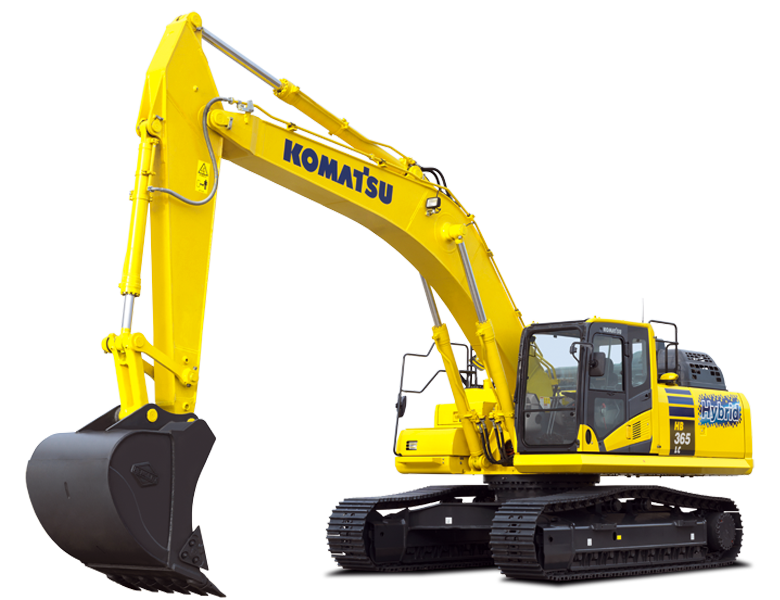
Hybrid excavators combine a traditional diesel engine with an electric assist system designed to recover and reuse energy during operation. This system uses an electric motor that captures kinetic energy when the excavator’s upper structure (the tail) swings and stores it for later use during heavy digging. The result is significantly reduced fuel consumption.
For example, the Komatsu HB365LC-3 uses a regenerative swing system that lowers fuel costs by around 20–25%. Unlike fully electric excavators, hybrids don’t rely on external charging — the system is self-sustaining. This approach supports sustainability goals while maintaining engine performance and reducing emissions at the same time.
Electric Excavators
Electric excavators operate entirely on battery power or tethered electricity, eliminating the need for fuel altogether. While hybrid excavators still depend partially on diesel, electric machines remove it completely. This makes them ideal for eco-sensitive sites, indoor operations, and tunnel projects where low noise and zero emissions are essential.
Models like the Volvo EC230 and JCB 19C-1E demonstrate that battery-powered excavators can match the digging power of diesel models while requiring far less maintenance — no engine, filters, or fuel systems to service. However, the current limitation lies in battery capacity, as operating hours per charge remain restricted. That affects overall productivity. Still, with rapid advancements in lithium-ion battery density and fast-charging capability, these limitations are shrinking. Electric excavators are quickly positioning themselves as the next step toward sustainable and low-cost operation.
Industry Barriers
Despite the progress, the shift toward hybrid and electric machinery faces real-world entry barriers. The need for specialized batteries, charging facilities, and advanced engineering drives up the initial cost by 20–40%, discouraging price-sensitive buyers. Battery systems also require consistent access to charging, making them difficult to maintain in remote or hilly areas where grid connectivity is poor.
Moreover, servicing these machines demands technicians trained in handling high-voltage systems, which many markets currently lack. Infrastructure for fast and universal charging is still developing, and until it matures, full electrification will face logistical challenges. Additionally, resale value and secondary market adoption remain uncertain, though early adopters will likely gain long-term advantages as sustainability becomes the market standard.
Dealers and Buyers
The transition to hybrid and electric machinery is a structural shift for both dealers and buyers. Dealers will need to retrain staff in electric systems, batteries, and electronics — moving beyond traditional mechanical expertise. Selling will also change: operating hours will no longer depend on engine wear but on battery cycles and energy efficiency.
Buyers, meanwhile, must focus on lifetime operating cost instead of just upfront price. Evaluating fuel savings, maintenance cost, and battery health transparency will be as critical as tracking engine hours once was. Those who adapt early — both sellers and buyers — will secure a strong advantage in the evolving construction machinery market.
The Road Ahead
The shift toward hybrid and electric machines marks a long-term transformation. In the coming years, hybrid excavators are expected to dominate due to their fuel efficiency and self-charging systems. As charging networks expand and battery density improves, electric excavators will gradually overtake hybrids.
OEMs are also exploring hydrogen fuel cells and solid-state batteries for higher energy density and faster charging. The manufacturer that masters these technologies first will gain a significant edge in the global market.
Conclusion
The move toward hybrid and electric excavators is no longer optional — it’s an industry-wide transition driven by economics, efficiency, and environmental regulations. Hybrid machines act as a bridge between diesel and fully electric technology.
Success in this transition will depend on awareness, dealer readiness, and buyer adaptability. Those who focus on lifecycle value rather than upfront cost — and invest early in sustainable systems — will lead the future of construction machinery.